
Secondary Suites in Edmonton — Clear Guidance from Idea to Approval
- Confirm whether a secondary suite is allowed
- Understand permits requirements
- Prepare permit-ready drawings review
- Avoid delays, redesigns, and compliance issues
Get a free quote

DO I NEED A PERMIT FOR A SECONDARY SUITE?
Yes. Secondary suites in Edmonton require a building permit, and in some situations a development permit may also be required depending on zoning compliance.
A secondary suite is a self-contained dwelling unit located within a principal residential building. The suite must contain its own kitchen, sleeping area, living space, and bathroom facilities and function as an independent residential unit.
Permit-ready drawings and approvals for Secondary Suite
We provide complete support for both new secondary suites and legalization of existing suites in Edmonton.
Our Edmonton secondary suite permit services include:
- Confirmation of suite eligibility
- Addressing zoning requirements
- Identification of Building Code requirement
- Preparation of permit-ready drawings
- Submission and management of permits
Experience professionals with City of Edmonton permit approvals
Edmonton-specific expertise
We regularly assist homeowners with secondary suite permits across Edmonton neighbourhoods and property types.
Design aligned with approvals
Our drawings are prepared with Alberta Building Code compliance and Edmonton permit requirements in mind.
Clarity over complexity
We help homeowners understand the regulations that apply to secondary suites and guide them through the approval process.
Fewer surprises
Early review helps identify building code and zoning considerations before submitting the permit application.
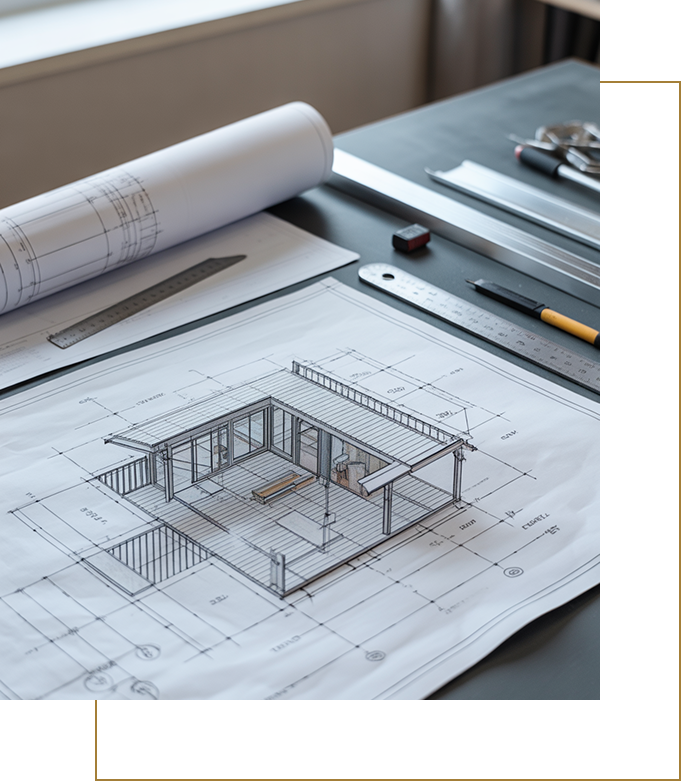
Design that supports approvals, not just construction
Secondary suites are reviewed closely for life-safety compliance and building code requirements, meaning the drawings must clearly demonstrate how the suite meets code provisions.
Our permit-ready plans illustrate key elements such as fire and smoke separation between units, sound separation, minimum ceiling heights, egress window requirements, and proper exit paths. Preparing drawings with these requirements in mind allows City reviewers to clearly verify compliance, which helps the application move more efficiently through the approval process.
HOW THE SECONDARY SUITE PERMIT PROCESS WORKS
Step 1 — Property & Zoning Review
We review your property zoning to confirm that a secondary suite is permitted and identify any applicable development regulations.
Step 2 — Permit-Ready Drawings
We prepare or coordinate professional drawings that demonstrate compliance with City of Edmonton submission requirements and the Alberta Building Code.
Step 3 — Permit Management
We submit and manage the permit application with the City of Edmonton and respond to review comments until approval is issued.
Client experiences
"I wanted to have a secondary suite and the team at Permit Masters was incredibly helpful with the entire permit process. They were very professional, conducted the site visit promptly, and within a week, they had submitted my application."
“We are very grateful for the services that we received from the Permit Masters professional team. They capture all the details and provide an easy to understand structure and outline to completing the permit process.”
“We moved into a house that had renovations done to it but no building permits. We wanted to get retroactive permits, if possible, in case there was ever an issue with our home insurer such as a fire or an injury related to the renos. In the end, we got all the permits we were looking for and the file is now closed. The whole process was smooth and easy.”
EDMONTON SECONDARY SUITE RULES & FAQs
What is a secondary suite in Edmonton?
A secondary suite is a self-contained dwelling unit located within a principal residential building. It includes a kitchen, sleeping area, living space, and bathroom facilities and functions as an independent residential unit.
Do I need a development permit for my secondary suite in Edmonton?
Not always. In many cases, secondary suites may be exempt from a development permit if the suite complies with all zoning regulations under the City of Edmonton Zoning Bylaw. If zoning requirements cannot be fully met, a development permit may be required.
Do I need a building permit for a secondary suite?
Yes. A building permit is always required because secondary suites must comply with the Alberta Building Code.
What is the minimum ceiling height for a basement secondary suite?
Basement suites must meet minimum ceiling height requirements established in the Alberta Building Code. Portions of the space may allow reduced height for structural elements such as beams or ducts where permitted by code.
What building code requirements apply to secondary suites?
Secondary suites must meet additional safety requirements including fire separation between units, interconnected smoke alarms, proper exits and egress windows, sound separation, and upgrades to plumbing, electrical, and ventilation systems where required.
Do I still need a permit if I’m not planning to rent out my suite?
Yes. Permit requirements are based on the design and use of the space. If the space includes the features of a secondary suite, permits are required regardless of whether the unit will be rented.
Do I need to do upgrades to legalize an existing secondary suite?
Yes. Existing suites that were built without permits must be reviewed and upgraded where necessary so the suite complies with the current Alberta Building Code before permits can be issued.
What do I need to obtain a permit for a basement secondary suite?
The City of Edmonton typically requires permit drawings and application forms demonstrating compliance with zoning regulations and building code requirements. These drawings must clearly show the layout, life-safety provisions, and construction details of the proposed suite.
To us, being a master means more than knowing the rules. It means years of hands-on experience, refined judgment, and the ability to anticipate challenges before they arise.
We’ve learned how municipalities actually work — not just how bylaws read — and we use that knowledge to guide projects with confidence and clarity.
Our role is to make a complex process feel simple, predictable, and manageable.